

Rental scams in the Netherlands: how to spot and avoid them
Updated
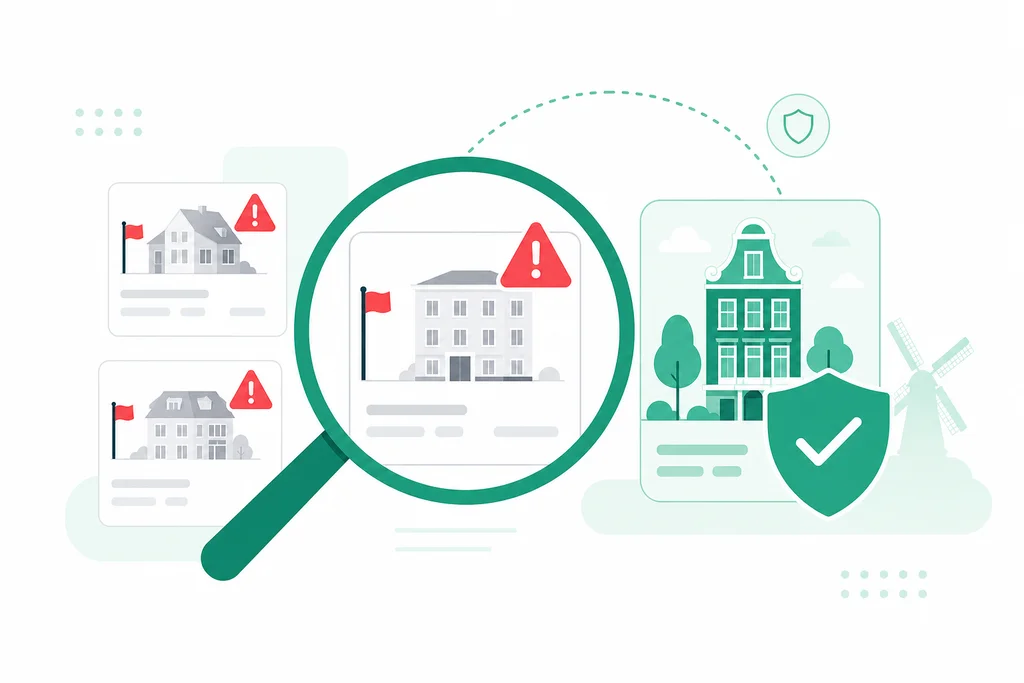
The Dutch housing shortage creates the perfect conditions for scams, and they target exactly the people under the most pressure: newcomers who feel they have to grab any place they can. The good news is that almost every rental scam relies on the same handful of tricks, and once you know them they're easy to spot. This guide walks through the common ones, the warning signs, and how to check that a listing and a landlord are real before any money leaves your account.
For the wider picture on how the market works, see our complete guide to renting in the Netherlands.
The one rule that stops almost every scam
If you remember nothing else, remember this: never pay any money before you have viewed the property in person and signed a written contract. No deposit, no "reservation fee", no "proof you're serious", nothing. Essentially every rental scam depends on getting you to pay before you've verified the place is real and actually available to you. Hold that line and the vast majority of scams simply can't touch you.
The common scams and their red flags
The landlord who's conveniently abroad. The classic. The "owner" says they've moved to another country, can't do a viewing, but will happily post you the keys once you've transferred the deposit. No genuine landlord rents this way. If you can't view the property and meet a real person connected to it, walk away.
Pay now to "hold" it. You're told the place is in huge demand (which is plausible, which is why it works) and asked to pay a deposit or fee immediately to secure it before a viewing. A real landlord takes a deposit after a contract, not before a viewing.
The price that's too good. A spacious central apartment far below what everything else in the area costs is bait. Scammers use a great price to switch off your caution and create urgency. If it's well under the going rate for that neighbourhood, be more suspicious, not less.
Pressure and urgency. "Three other people want it, decide in the next hour." Manufactured urgency is designed to stop you thinking, verifying, or viewing. A genuine opportunity survives you taking a day to check it out. Pressure to pay right now is itself a red flag.
Untraceable payment. A request to pay by cash, cryptocurrency, gift cards, or a money-transfer service like Western Union is a giant warning sign. Legitimate deposits go by normal bank transfer, which is traceable. Anything designed to be untraceable is designed to disappear.
No proper contract, nothing in writing. A landlord who won't give you a written contract, dodges putting terms in writing, or forbids you from registering at the address is either running a scam or an arrangement so irregular it puts you at risk. Insist on a proper written contract.
Copied or fake listings. Scammers lift photos and text from real listings and repost them at a lower price. If something feels off, drop the photos into a reverse image search and see if they appear elsewhere, and search the exact address to check whether it's listed by someone else.
How to verify a listing is real
You don't need to be an expert, just methodical. View the property in person whenever possible, or at the very least insist on a live video call where they walk through the actual place (a scammer with stolen photos usually can't or won't). Meet the landlord or agent and confirm they're genuinely connected to the property. Reverse-image-search the photos and search the address to catch duplicates. And keep every payment traceable through your bank, so there's always a record. A real listing comfortably survives all of this. A scam falls apart at the first honest check.
What to do if you think you've been scammed
Act quickly. Contact your bank immediately, because a very recent transfer can sometimes still be stopped or recalled. Report it to the police (in the Netherlands you can file a report with the politie), and report the listing to the platform it appeared on so they can take it down and protect others. Keep every message, advert, receipt and bank record, they're what any investigation or refund attempt will rely on. Being scammed is not your fault, and reporting it is what helps stop the same people doing it to the next arrival.
Frequently asked questions
What is the most common rental scam in the Netherlands?
Being asked to pay a deposit or "reservation fee" before you've viewed the property and signed a contract, often by a "landlord" who claims to be abroad and can't meet you. Never pay before a viewing and a signed contract.
How can I tell if a rental listing is fake?
Warning signs include a price well below the market, a landlord who won't meet you or do a viewing, pressure to pay quickly, requests for untraceable payment, and a refusal to provide a written contract. Reverse-image-search the photos to check if they're stolen from another listing.
Is it safe to pay a deposit before viewing an apartment?
No. This is the single most common way people are scammed. Pay only after viewing the property in person (or via a genuine live video walkthrough) and signing a written contract, and always by traceable bank transfer.
What should I do if I've already paid a scammer?
Contact your bank immediately to try to stop the transfer, report it to the police, and report the listing to the platform where you found it. Keep all messages, adverts and payment records as evidence.
Why are newcomers targeted so often?
Because scammers exploit urgency and unfamiliarity. People new to the country feel pressure to secure housing fast and may not know the local norms, which is exactly what these scams rely on. Knowing the red flags removes most of that advantage.
Search safely and move with confidence
Knowing the red flags means you can act fast on a real listing without fear of being caught out. Set up a saved search on Findrent, turn on instant alerts, and apply the simple rule every time: never pay before a viewing and a signed contract. Browse current listings in Amsterdam, Rotterdam, Utrecht, or any city, and read next about rental deposits and your rights or how to find a rental and beat the competition.